StackBrief: Matching dependency briefs to the lockfile, not a CVE feed
Next.js + Windmill jobs against the real lockfile; Gemini writes the brief; Stripe for billing. Not another news digest.
Rejected path: Launch another news digest and compete with free newsletters
Overview
I wanted release notes matched to the versions I run, without living in feeds. The first idea was a news digest filtered by tech names. That looked weak against free newsletters, so I kept the pipeline and changed the job: say whether a release hits the lockfile. Built Next.js on Vercel plus a Windmill night pipeline on a VPS; Stripe, Telegram, locales, and continue-or-stop review rules came after the weekend ship. Same pipeline, infrastructure job, not a news digest.
Problem
CVE tools answer 'is this vulnerable?' News digests answer 'what is trending?' Neither answers 'does this release hit the versions I run?' Dependabot is noisy. People maintaining small products still get surprised by breaking changes.
Constraints
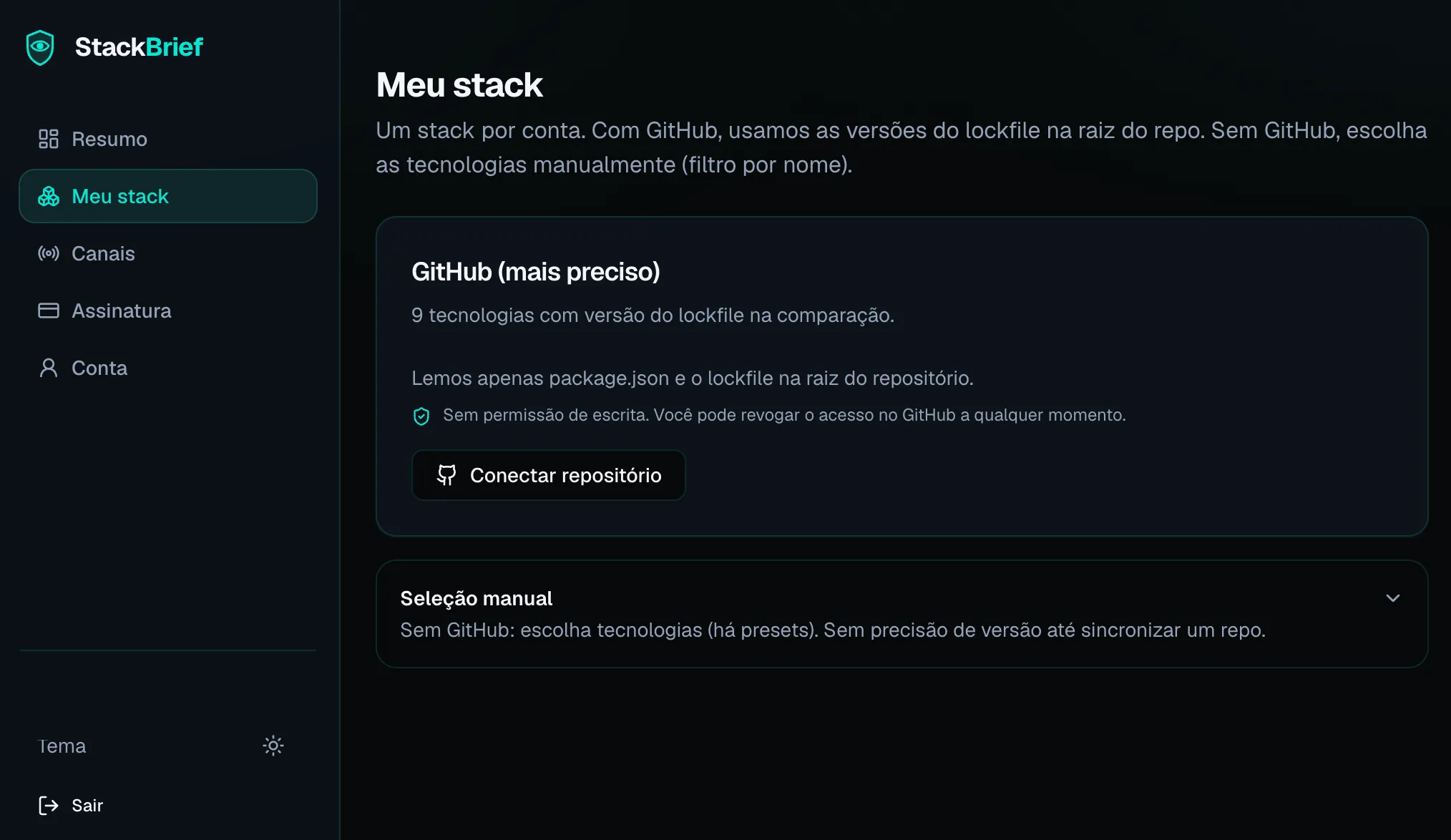
- GitHub App may request contents read; the product only fetches root package.json and lockfile.
- One stack per account in v1.
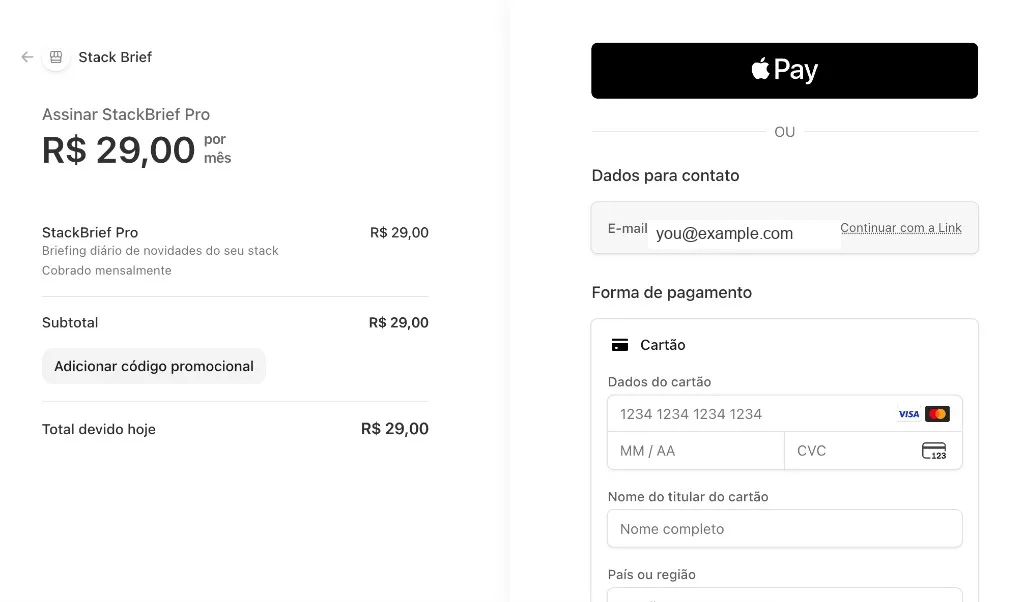
- LLM cost has to survive R$29/mo or $9/mo: filter and shared cache before Gemini.
- Secrets stay out of git; automation runs in an isolated workspace.
- No CVE scanner, WhatsApp, or Team plan in v1.
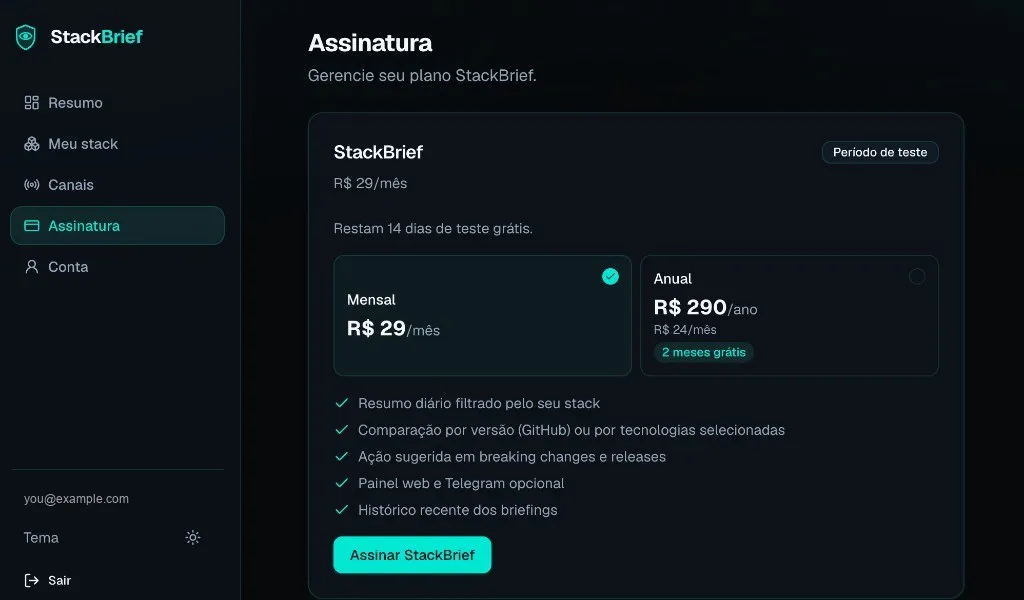
- Locale and Stripe currency must match (BRL for pt-BR, USD for en/es).
Architecture
Next.js 16 on Vercel for auth, onboarding, briefing UI, and billing. Supabase with RLS. Windmill Bun pipeline at night: ingest, filter, version match, generate, deliver. Onboarding can trigger an on-demand brief so value does not wait for the nightly cron. Checkout selects locale-matched Stripe prices.
Key Decisions
Turn the news digest into version-aware briefs instead of starting over
Another news digest looked hard to defend against free newsletters. The ingest/filter/deliver path already existed; only the job changed.
- Launch another news digest and compete with free newsletters
- Scrap the weekend build and start from scratch
Match against lockfile versions, not tech names alone
Name-only matching invents adjacent tools and breaks trust. Quiet days only mean something if the versions are real.
- Manual tags only (kept as fallback)
- Scan the whole repo (rejected)
Cache Gemini output by tech@version
Without a shared cache, cost scales with users. With it, the same release text is reused.
- Generate per user every night
Keep R$29 list price; skip a launch discount
Without traffic, a permanent discount is mostly appearance. Pricing stayed a hypothesis until real usage.
Add EN/ES and USD the day after ship
BRL-only limits early reach for an engineering tool. Same product job, second currency.
Write continue-or-stop review rules before paid users exist
Keeps scope honest. Forces a short look at activation and trial-to-paid instead of shipping features forever.
Fix session and auth redirects after a production audit
Login and first brief fail more often from cookies, OAuth, and WAF than from landing copy.
Tech stack
- Next.js 16 (App Router) + [locale] routing
- React / TypeScript
- Tailwind CSS 4 + shadcn/Radix
- next-intl (PT-BR, EN, ES)
- Supabase (Auth, PostgreSQL, RLS)
- Windmill (self-hosted, Bun/TS)
- Google Gemini Flash-Lite
- GitHub App (manifests only)
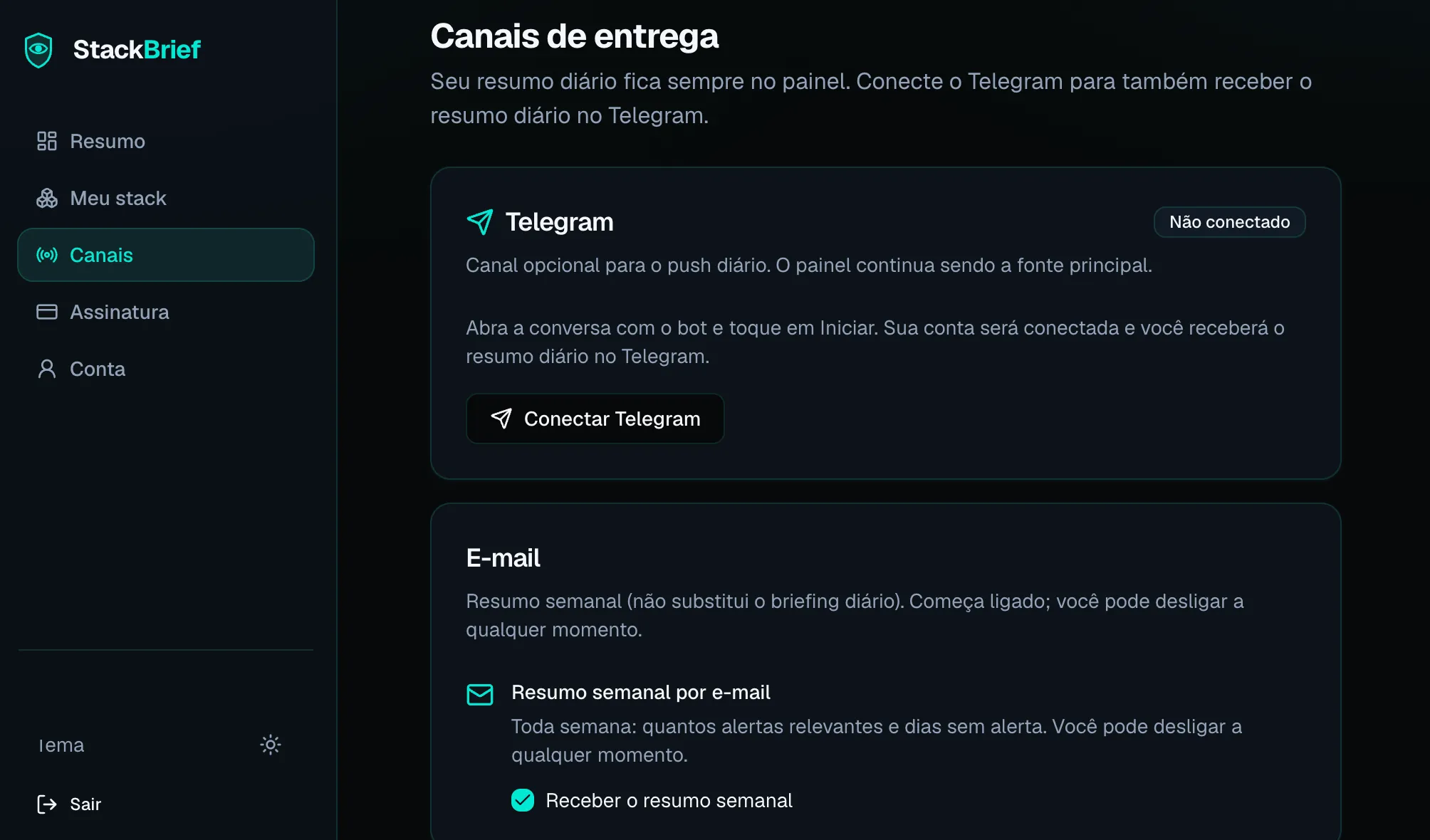
- Telegram Bot API
- Stripe Checkout / Portal / Webhooks (BRL + USD)
- Vercel
- PostHog
- Resend (optional weekly email)
Impact
Dropped the news-digest framing before launch. The same ingest pipeline now answers an infrastructure job: does this release hit the versions you run? End-to-end path (onboarding → first brief → Stripe trial) is live without CVE/WhatsApp/Agency scope. Continue-or-stop rules decide the next cut from activation data, not from feature itch.
Learnings
- Research should challenge the idea, not dictate vanity pricing. Prefer a clear USD ceiling over a permanent discount with no traffic.
- First lockfile-aware brief matters more than polish or extra languages.
- WAF, Stripe configuration, and OAuth redirects sit on the path to the first useful screen.
- Continue-or-stop rules written early are easier to keep than ones invented after you are attached to the build.
- Say what the GitHub App permission allows and what the product actually fetches.
- i18n without the matching currency is half done.
Product snapshots
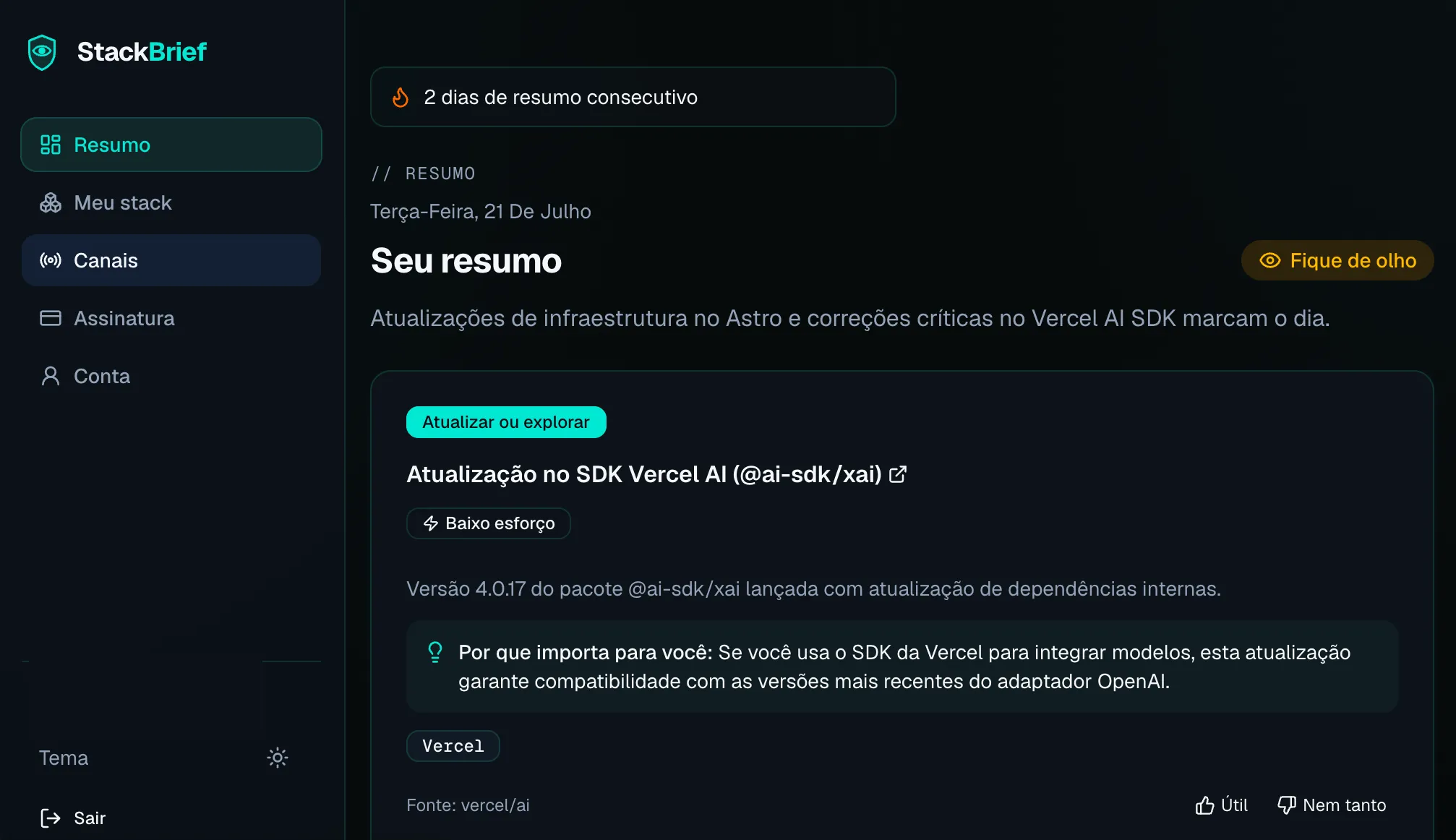
Live at stackbrief.erbsu.com. App screens from the logged-in product (PT-BR).
Daily brief
Stack
Channels
Billing
Architecture
Dashboard on Vercel (Next.js). Night engine on Windmill (VPS). Shared Supabase with RLS. First access can generate a brief on demand so value does not wait for the nightly cron.
What I cut
CVE scanner. WhatsApp. Team/Agency plans. Permanent low price without traffic. Inflated ROI claims on the landing. I cut anything that left the product question: does this dependency release affect a version your project already uses?
Scroll for the next case
Next case: Dieta e Treino: Telegram as the app; the dashboard is a short-lived link